Starters
A friendly introduction to English.
- CEFR
- Pre A1
- DURATION
- 45 min
- COMPONENTS
- 3
Listening · Reading & Writing · Speaking
CAMBRIDGE ENGLISH
Little steps. Big confidence.
Prepare for Cambridge Pre A1 Starters, A1 Movers and A2 Flyers with expert teachers, personal feedback and engaging, age-appropriate practice. Learn online — and discover what English can become in Ireland.
Discover what children learn at each stage. Select an examination to explore the skills, format and next steps — right here on the page.
A friendly introduction to English.
Listening · Reading & Writing · Speaking
Building everyday communication.
Listening · Reading & Writing · Speaking
Growing independence in English.
Listening · Reading & Writing · Speaking
Cambridge Young Learners examinations are voluntary. Some children enjoy working towards a certificate; others flourish when they can explore English without pressure. The right path depends on your child's readiness, motivation and your family's goals.
Dreaming of a bilingual future for your child?
Curiosity today can open up a world of possibilities tomorrow.

THE C2 METHOD
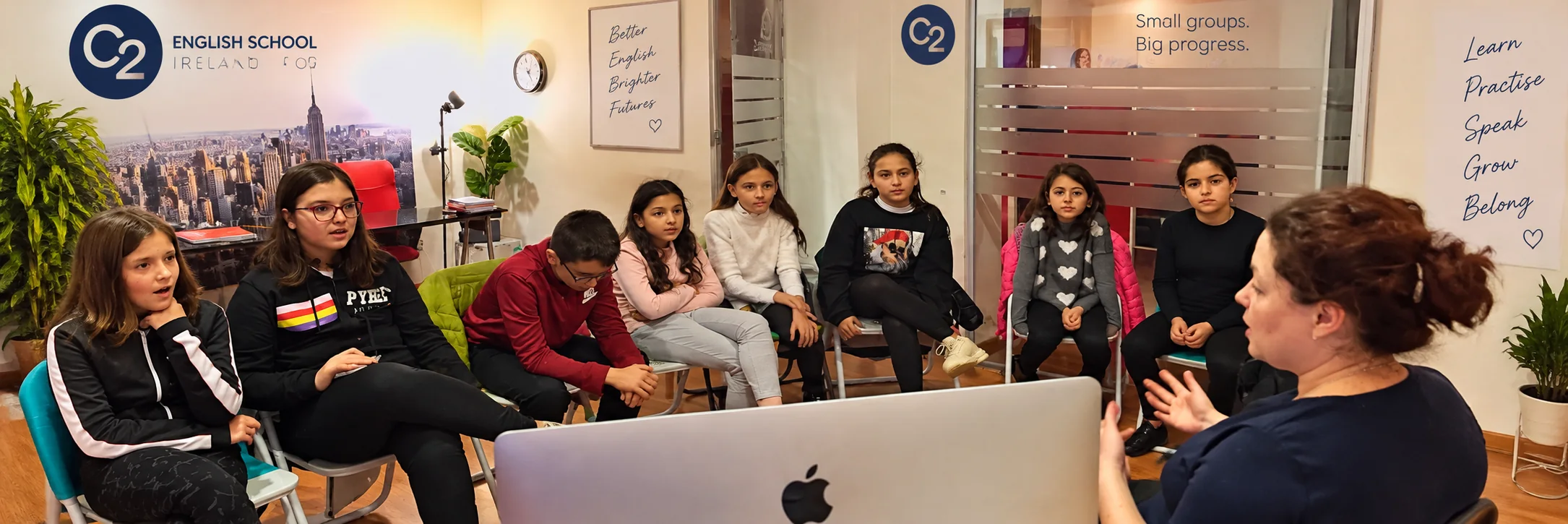
We discover how your child learns, build confidence through playful practice and adapt each lesson as they grow. One leading teacher and two supporting teachers work together throughout the journey.
We explore what your child already understands, what they enjoy and how confident they feel using English. There is no pressure to perform.
A child discovers a toy elephant and describes what they see.
“It's elephant! He have big ears!”
“Brilliant! It's an elephant, and it has big ears! What colour is it?”
“It's a grey elephant! It has big ears and a long trunk!”
Learning through play, encouragement and a little discovery.
Your child's leading teacher follows their progress, while two supporting teachers bring fresh activities, encouragement and opportunities to use English.
Three teachers support your child's English journey — with encouraging lessons, real conversations and playful practice between sessions.

One leading teacher follows your child's progress, builds confidence and adapts each lesson to their needs.
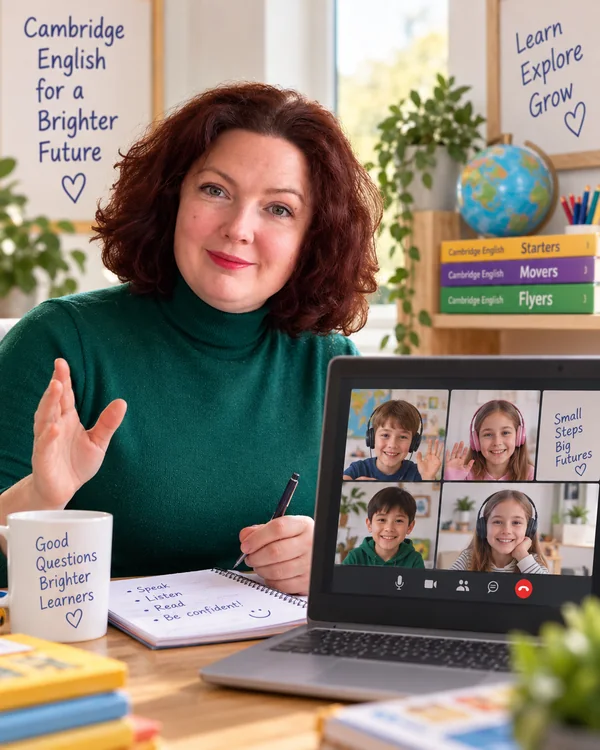
A second teacher brings fresh activities, encouragement and opportunities to practise online.
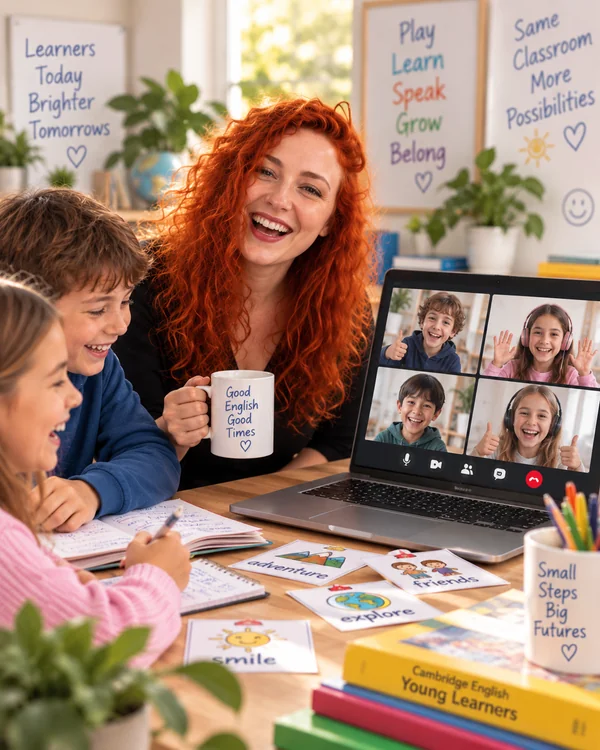
Another friendly teacher helps your child communicate naturally through playful interaction.
Three families share what learning English with C2 has meant to their children.

“My daughter genuinely enjoys attending her lessons and is becoming increasingly confident speaking English. It’s not just about preparing for an exam. It’s about really learning the language.”
Parent testimonials supplied to C2. English translations from Italian, Spanish and French; illustrated avatars are not photographs of the reviewers.
20 helpful answers for parents exploring Cambridge Young Learners and learning with C2.
Cambridge English Young Learners qualifications are designed to help children show what they can do in English. The three stages are Pre A1 Starters, A1 Movers and A2 Flyers. Tasks use familiar topics and child-friendly activities to assess listening, reading, writing and speaking. They can provide motivating milestones, but children can make excellent progress without taking an exam. At C2, we focus on making English useful, enjoyable and confidence-building first.
Starters is the first step, at Pre A1, with simple vocabulary and familiar situations. Movers builds towards A1, asking children to understand and communicate a little more independently. Flyers corresponds to A2 and includes more developed reading, writing, listening and speaking tasks. These are stages of language ability, not age-based classes. We help families choose a suitable starting point by considering what a child can already understand and say.
There is no single ideal age. Some children enjoy English games and stories long before they are ready for examination tasks. Others start formal preparation later, once they have a comfortable foundation. We consider your child’s age, interests, experience and confidence rather than placing them into an exam simply because of their birthday. A relaxed conversation with Mary Mangan can help you decide whether to focus on enjoyable language development or a particular Cambridge milestone.
No. Taking a Cambridge Young Learners examination is entirely optional. For some children, an exam provides a positive goal and a moment to celebrate progress. For others, learning through stories, games and conversation without an examination deadline is the better choice. We discuss the child’s motivation and readiness alongside the family’s objectives. Young Learners results are reported using shields rather than a conventional pass-or-fail grade, so the emphasis can remain on progress.
They can be a valuable foundation, but no single examination or short course makes a child bilingual. Strong bilingual ability develops through sustained exposure, meaningful communication, regular practice and opportunities to use both languages in real life. Starters, Movers and Flyers can help families see progress along that journey. At C2 we encourage curiosity and confidence alongside exam skills, and we can help you think about a longer-term learning pathway that fits your family.
We combine clear learning objectives with age-appropriate games, stories, speaking challenges and creative activities. A lesson might involve describing a mystery object, building a short story or solving a problem together. The purpose is not entertainment for its own sake: enjoyable tasks give children reasons to listen, speak and remember new language. Teachers adapt the activities to each child’s level, interests and confidence, so learning feels achievable and rewarding.
Both options are available. Individual lessons allow the teacher to follow one child’s pace, interests and specific needs. Mini-groups add conversation, teamwork and shared discovery with children of similar ages and English levels. Group availability depends on suitable matching, so we never promise a particular group before checking. Both formats include teacher guidance and personal feedback. We can discuss which option suits your child’s personality, objectives and timetable.
Our approach is built around one leading teacher who follows the child’s progress, with two supporting teachers who can contribute different activities, perspectives and opportunities to communicate. This does not mean that three teachers attend every lesson. The leading teacher maintains continuity, while additional support is used as appropriate to the programme. Children benefit from a familiar relationship without relying on only one voice or teaching style.
Yes. Our individual and suitable mini-group lessons can be delivered online. Teachers use short interactive tasks, visual materials, conversation and regular changes of activity to help children stay engaged. We adapt the pace and structure to their age and attention span, rather than copying an adult online lesson. Families can also discuss learning opportunities in Ireland. The right format depends on your child’s confidence, experience and practical circumstances.
We begin by getting to know the child and creating a welcoming, low-pressure environment. A shy learner may start by choosing pictures, giving short answers or playing a simple language game before moving towards longer conversations. Teachers celebrate effort and give constructive feedback without interrupting every attempt. Confidence usually grows through many small successes, not by forcing a child to perform. We share observations with parents and adjust the approach when needed.
We offer 30-, 40- and 50-hour teaching programmes. As a general guide, around 30–40 hours may be a recommended minimum for examination-focused preparation, depending on the exam and the child’s existing level. That is not a guarantee of readiness or a fixed requirement for every learner. Children starting further from the target level may need more time. We assess their starting point and discuss the family’s ambitions before recommending a sensible plan.
Each option includes teacher-led lessons, an individual learning plan and feedback as your child develops. Thirty hours offers a focused route for children with an appropriate starting point. Forty hours allows more time to practise and consolidate skills. Fifty hours provides a longer journey with greater depth. Depending on the programme, children may also use up to 200 hours of complementary practice and resources; these are not additional teacher-led hours. We will explain the specific inclusions before enrolment.
We look at what your child can understand and communicate, not just what grammar they know. The starting assessment may include a friendly conversation and age-appropriate listening, reading or writing activities. We also ask about previous learning and how the child feels about using English. This helps us recommend a suitable examination level, lesson format and amount of preparation. An online level test alone should not determine a young child’s entire learning plan.
Your child’s leading teacher follows their development across the skills they are practising and gives feedback throughout the programme. We look for progress in understanding, communication, accuracy and confidence, rather than relying only on test scores. Parents can discuss what is going well, what needs more practice and what the next realistic goals should be. When exam preparation is appropriate, we also use suitable practice tasks to identify areas for improvement.
A2 Flyers can be an important milestone, but it is not the end of learning English. Depending on age, readiness and objectives, the next stage may involve developing broader A2/B1 communication skills and eventually preparing for qualifications such as B1 Preliminary for Schools. Some families prefer to concentrate on reading, conversation and real-life language use before another examination. We can help plan a gradual progression towards stronger independence and, for families who wish, long-term bilingual ability.
Lesson length depends on the child’s age, attention span, learning format and programme. Younger children often benefit from shorter, varied activities, while older or more experienced learners may be comfortable with longer sessions. We will agree the duration and frequency with you before lessons begin, making sure the timetable supports learning rather than fatigue. The total 30-, 40- or 50-hour programme refers to the agreed teaching time.
We will discuss your preferred days and times and try to find a practical schedule around school and family commitments. Individual lessons usually offer more flexibility; mini-group lessons require times that work for the children and teachers in that group. Availability must be confirmed before enrolment. We also consider how often a child should study, because regular, manageable sessions tend to support confidence and retention better than an exhausting timetable.
Yes. We believe parents should understand how their child is getting on. The leading teacher monitors progress and can explain strengths, areas for development and practical ways to encourage English outside lessons. Feedback is constructive and age-appropriate; it should support the child rather than create unnecessary pressure. If you have concerns about motivation, confidence or learning pace, we encourage you to raise them so the teaching plan can be adjusted.
Yes. We encourage short, enjoyable practice between lessons: reading together, listening to stories, using songs or playing age-appropriate word and sentence games. C2 also offers digital practice activities, although not every Learning Lab tool is designed for younger children. Teachers can recommend suitable activities for your child’s level. The goal is consistency and curiosity, not hours of compulsory screen time. Even a few enjoyable moments of English can help reinforce classroom learning.
You can contact C2 English School and request a conversation with Mary Mangan, our Director of Studies. Tell us your child’s age, current English experience, whether an examination is a goal and whether you prefer individual or mini-group lessons. Mary Mangan can help you explore a realistic starting point and discuss the available options. There is no need to choose 30, 40 or 50 hours before that conversation.
Examination formats and arrangements may change. Cambridge English Young Learners information ↗
A PERSONAL INVITATION FROM C2
Tell us about your English level, your examination goals and when you hope to take C1 Advanced. Mary Mangan will help you explore the preparation that makes sense for you.
Mary Mangan · Director of Studies · Leading C1 Preparation Teacher
A real conversation with a real teacher. No obligation.